There are roughly 37 trillion cells in the human body.
This is the story of two of them: Squiggy and CeCe.
On this week's episode
Something's NOT Registering!
In which our heroes explore HuBMAP's Registration User Interface (RUI), rescue a stray human tissue sample, and learn that, when it comes to anatomy, "in the ballpark" is not an ideal unit of measurement.


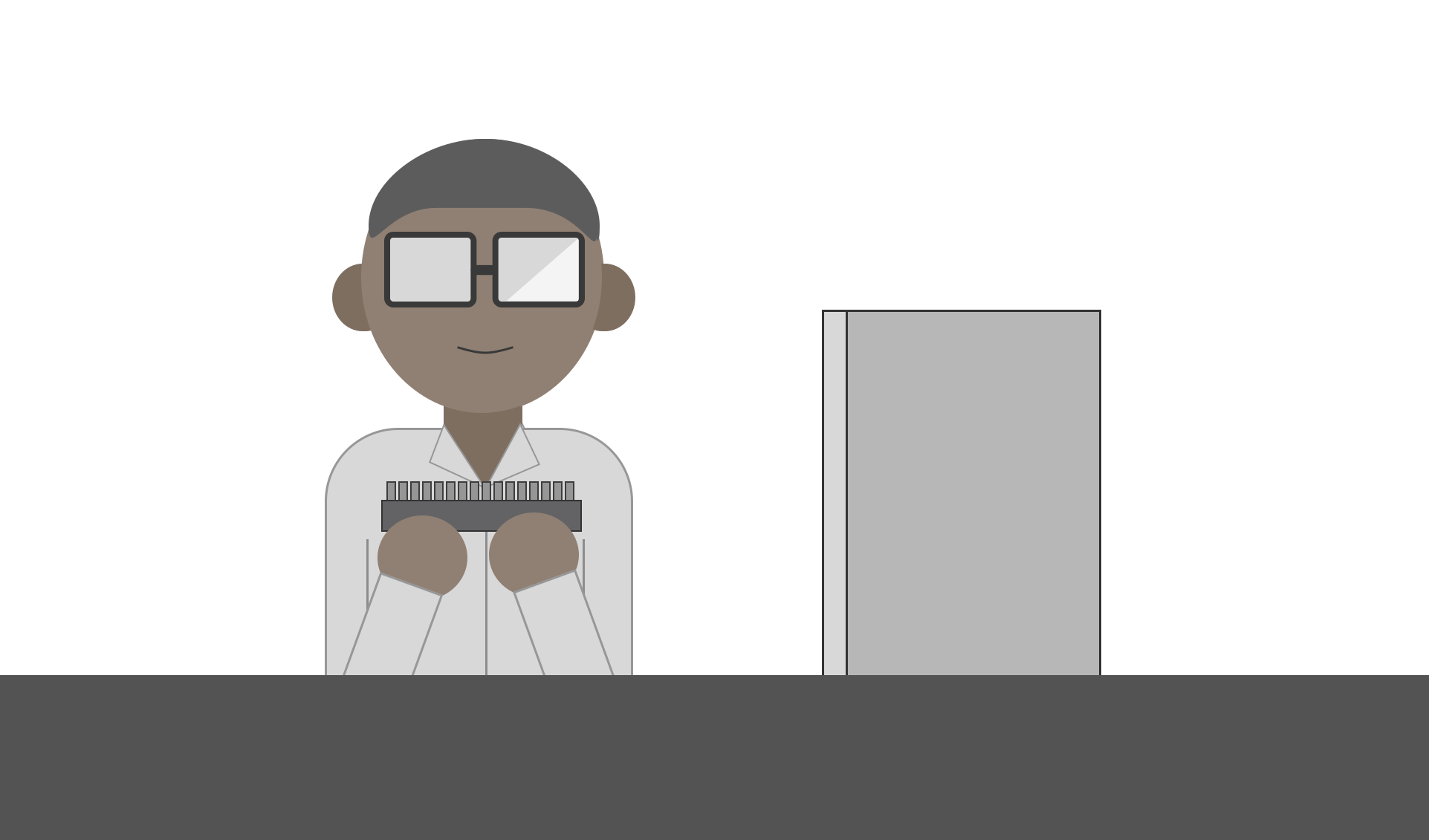
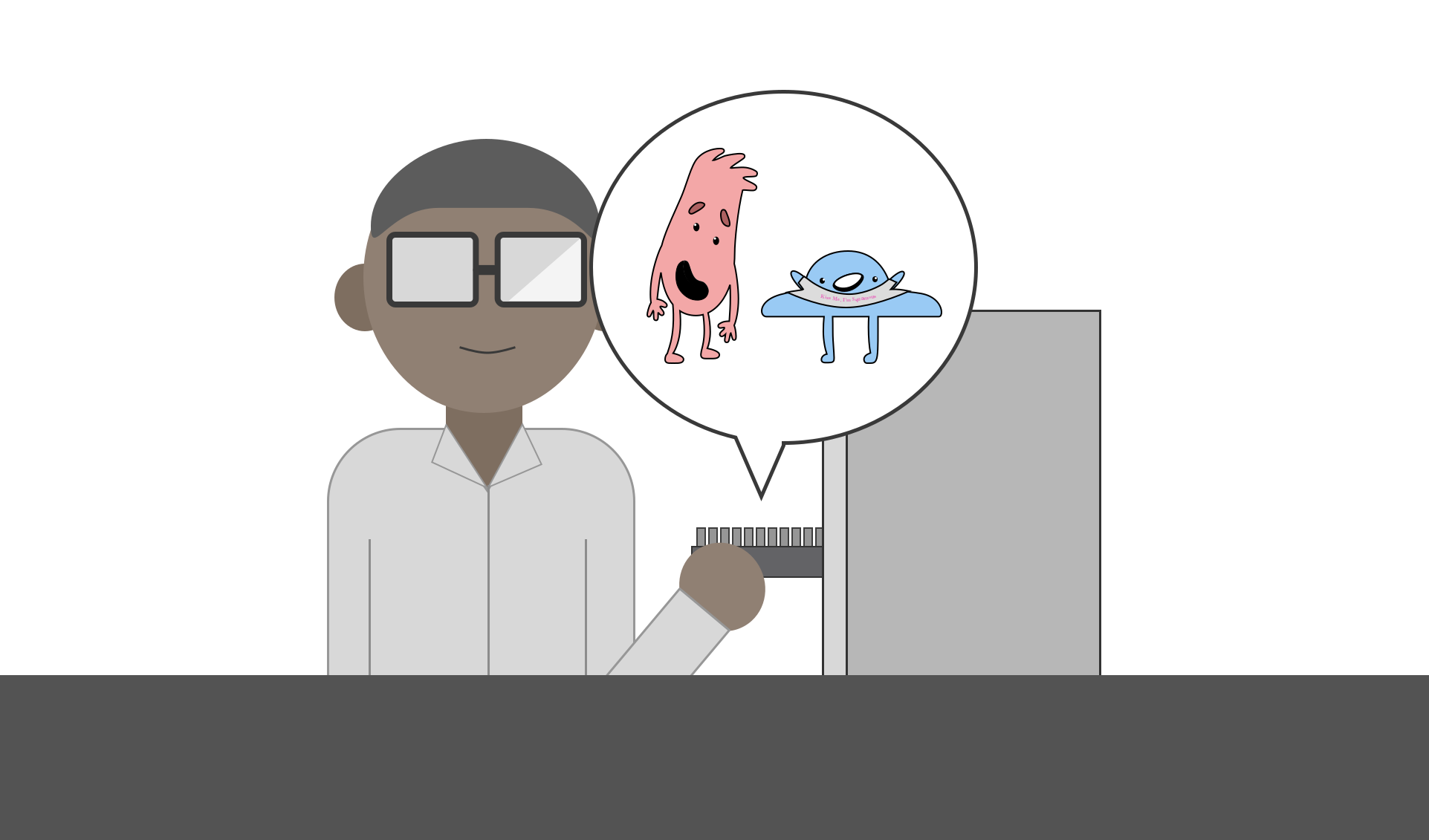
Registering a tissue sample
Squiggy and CeCe use the Registration User Interface to place a kidney tissue sample in a shared three-dimensional reference organ.
CeCe: Well good morning, Squiggy! You look pretty happy for
having just rolled out of bed.
Squiggy: I'm in a great mood, CeCe! After all, in our
last adventure, I discovered my cell type and resolved my identity crisis.
CeCe: And it looks like you bought yourself a shirt.
Squiggy: Oh, wow, CeCe. Thanks for noticing! It's a good
thing I wore it today because it's getting pretty chilly in here.
CeCe: Oh, I do NOT like seeing that!
Squiggy: What is it, CeCe?
CeCe: It's a kidney tissue sample, Squig, separated from its
home organ and all alone.
Squiggy: Ah, that's no big deal. We can just pick this little
guy up, and the next kidney we come across, we can just stick him in
somewhere!
CeCe: No way, Squig!! Don't you know that when you're trying
to identify a tissue sample, it's all about location, location,
location!
Squiggy: What do you mean? Just look at that kidney! It looks
the same all over. Just a big brown blob.

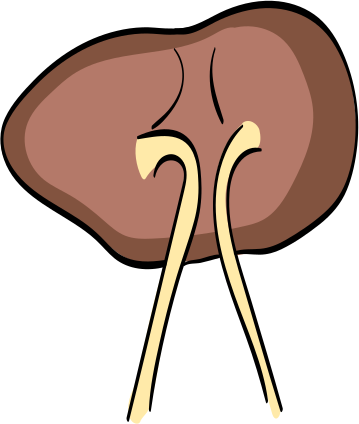
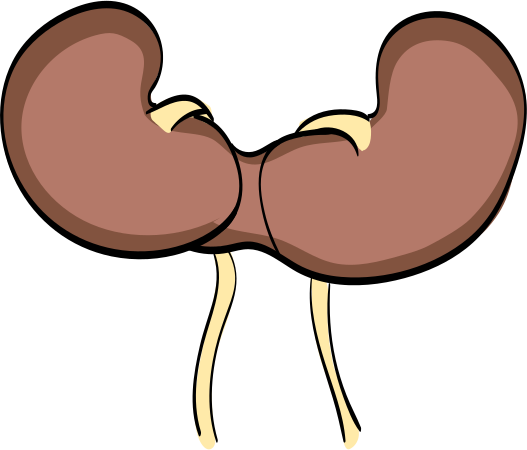

CeCe: Well, Squig, that "big brown blob" contains a great
deal of variation.
CeCe: Right kidneys are different from left kidneys, men's
kidneys are different from women's kidneys, and don't get me started
on how kidneys can vary in shape, size, and location from person to
person.
CeCe: And don't forget that each kidney contains a number of
distinct anatomical structures. These smaller structures have
different roles to play and are made up of different kinds of
tissues and cell types.
CeCe: However, two distinct anatomical structures may be only
millimeters apart.
Squiggy: So, wait a minute. Are you saying that just guessing
where our tissue goes may not be a great idea?
CeCe: Well, Squig, let's just say that guesstimating is not
exactly what researchers call "best practice."
Squiggy: Well, that sounds impossible. I'm going back to bed.
CeCe: It's not hard at all, Squiggy. In fact, there's a tool
to make it really easy!
CeCe: Researchers can register their tissue sample data with
the Registration User Interface tool in the Human Reference Atlas.
CeCe: It takes only about 5 minutes to learn how to do it and
an average of 2 minutes to register a tissue block.
CeCe: All we need to do is select the correct organ.
CeCe: Now, let's position this kidney just how we want it by
using these buttons up here.
CeCe: Or we can rotate it with a mouse or keypad.
CeCe: Now, we can type in the height, width, and depth of our
tissue block.
Squiggy: What's that?
CeCe: That's how our tissue block appears in the 3D world of
the Registration User Interface!
CeCe: Now we can use these sliders here to rotate the 3D
block and move it into the correct place in the kidney.
CeCe: Now this is the fun part. I'm going to need your help,
Squiggy!
CeCe: We just need to move this tissue block so that it's in
the same place on this model as it was on the actual organ.
Squiggy: Look at us, CeCe, we're registering tissue!
CeCe: Now this is kind of cool. Watch as we move into the
space of the 3D model, we'll see an example of what's known as
"collision detection."
Squiggy: Collision!! Ahhh!!! CeCe, I knew your crazy
adventures would be the end of me! Oh, goodbye cruel world!
Squiggy: Oh. Well, that was not very dramatic.
CeCe: Nope, Squiggy. You supplied ALL the drama we needed.
CeCe: You see, what our block is "colliding" with are
anatomical structures. The RUI is just letting us know what our
tissue sample is bumping up against as we move it through the organ.
This helps for both placement and identification.

Squiggy: Well, I see what's been registered already, but it
looks like more information is needed.
CeCe: That's right, Squig. The Human Reference Atlas is
always looking for more data.
CeCe: The more tissue that's registered, and the more other
researchers can benefit from your correctly identified data, the
more complete our picture of the human body becomes.
CeCe: And that's a very good thing for understanding our body
in health and disease!
CeCe: So click on
this link
to the Registration User Interface and register your tissue data
today!
Squiggy: And don't forget to spay and neuter your pets!
CeCe: Wrong public service announcement, Squiggy.
Squiggy: But it's still a good idea.
CeCe: Yeah, I suppose.