There are roughly 37 trillion cells in the human body.
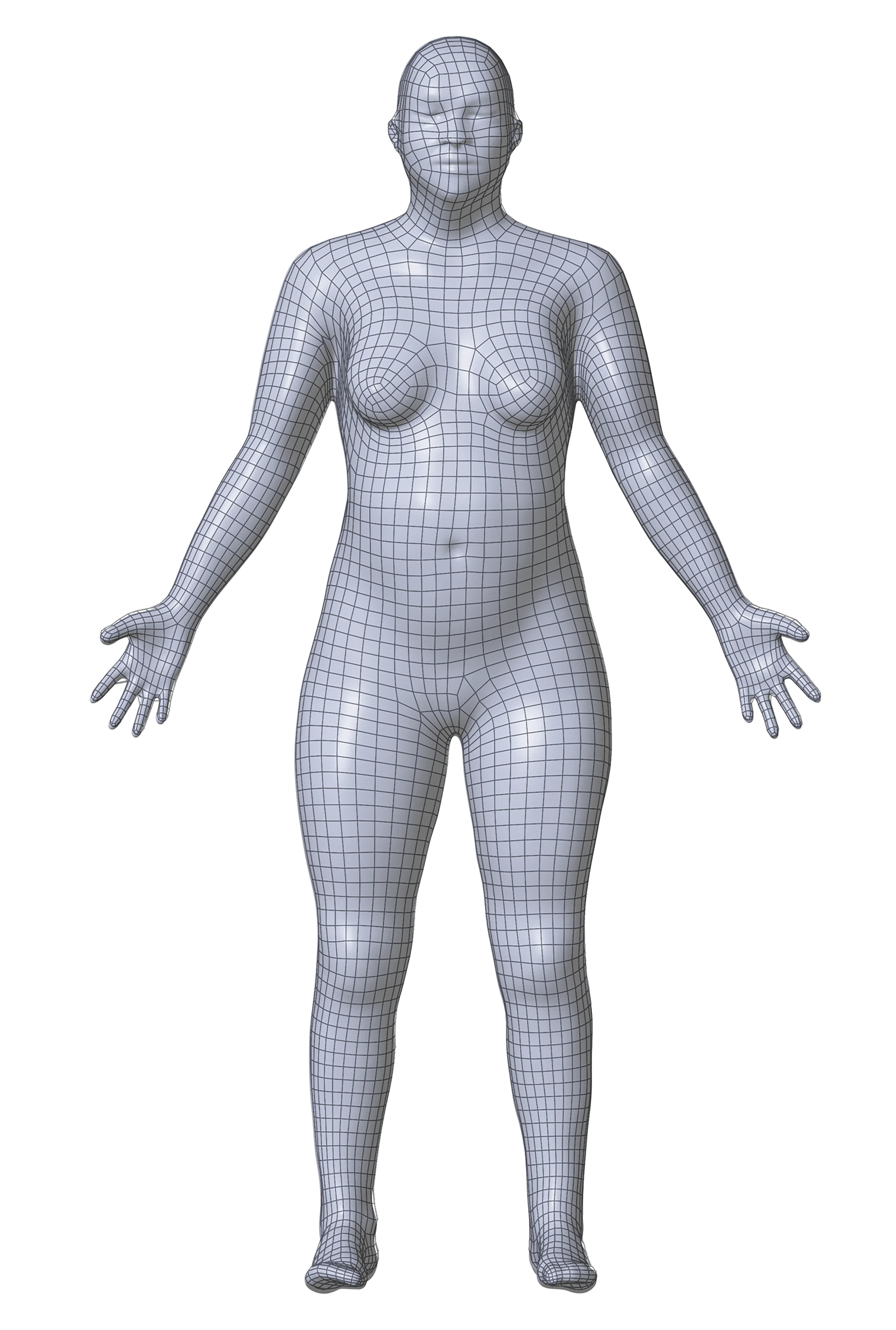
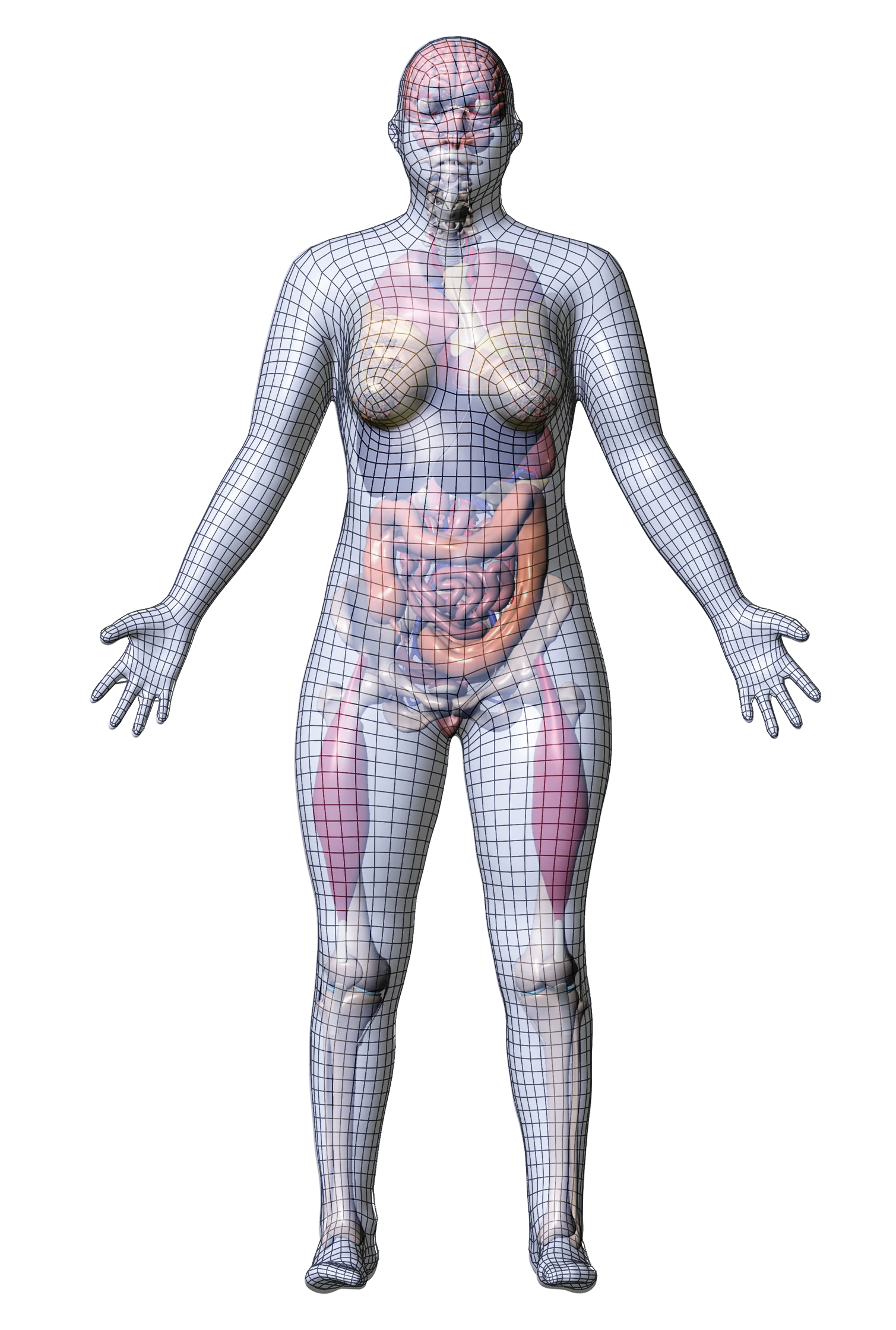
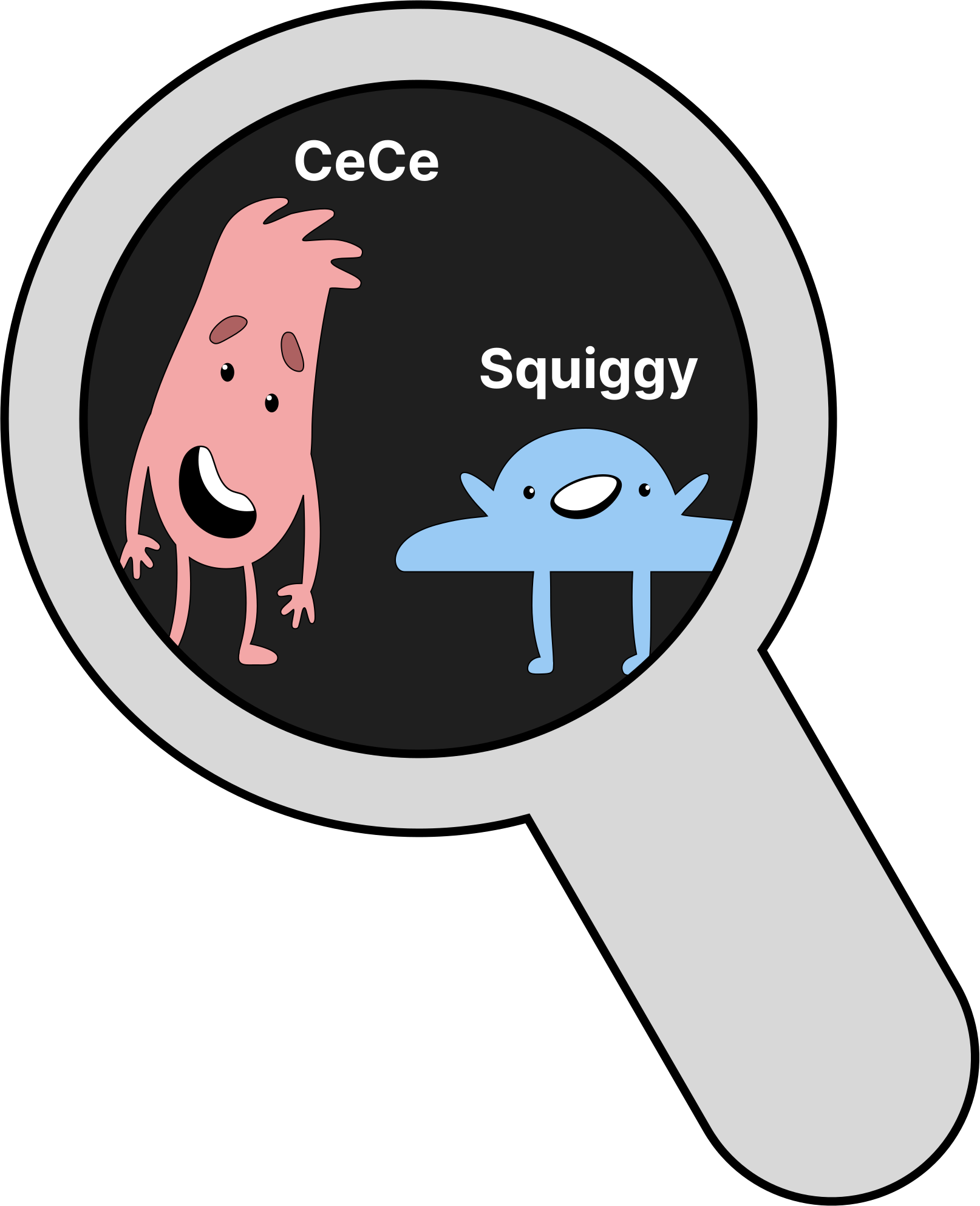
This is the story of two of them: Squiggy and CeCe.
On this week's episode
Squiggy's Identity Crisis!
In which our heroes take a ride on HuBMAP's ASCT+B Reporter, learn that "partonomy" has nothing to do with the science of partying, and are reminded why it's always important to read notes from your mother.


Finding Squiggy's cell type
Squiggy and CeCe explore anatomical structures, cell types, and biomarkers in the ASCT+B Reporter to identify Squiggy.
TV narrator: In conclusion, the Human Reference Atlas is a
comprehensive, high-resolution, three-dimensional atlas of all the
cells in the healthy human body.
TV narrator: With the HRA, everyone will be able to find
the names and locations of all their favorite cells!
Squiggy: Hey, CeCe?
CeCe: What is it, Squiggy?
Squiggy: Have you ever wondered about the big questions? You
know: Who am I? Do I belong? What is my purpose?
CeCe: Sure, Squig. I think everybody does.
Squiggy: But I have so many questions, and I don't know any
of the answers. This identity crisis has me all bent out of shape!
CeCe: Whoa, Squiq! Don't burst your membrane!
CeCe: We can use the Human Reference Atlas to figure out what
you are and where you belong!
CeCe: And I think I know just the perfect place to start!
Squiggy: Ahh! Who just turned out all the lights?
CeCe: Don't worry Squiggy, it's just a scene transition.
Squiggy: Oh, well, I am NOT a fan.
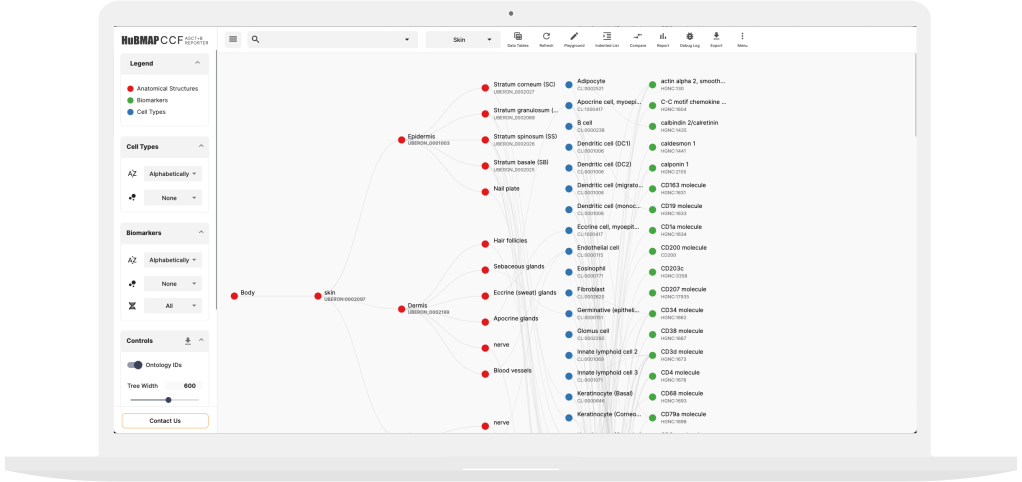

CeCe: This is the Human Reference Atlas's ASCT+B Reporter!
Squiggy: What does it do?
CeCe: Well, it can help us solve your identity crisis!
CeCe: The ASCT+B Reporter allows researchers to explore
anatomical structures, cell types, and biomarkers that make up
organs.
CeCe: The data tables from which the Reporter gets its
information are authored and reviewed by experts in their field.
Squiggy: Do you think I have biomarkers that would help
scientists identify what kind of cell type I am?
CeCe: You bet, Squig! Scientists have many ways of
detecting the presence of characteristic biomarkers.
CeCe: Unfortunately, those are way too complicated to get
into right now, so let me just look at that tag on your back.
Squiggy: Tag? What tag?
CeCe:
Right here!
Squiggy: Ooooh!
Squiggy: But how will these help me find out what kind of
cell I am?
CeCe: I'll show you. Ready to go on another journey,
Squiggy?
Squiggy: Oh, CeCe, please... no more! Don't make me ride
this crazy thing again. I haven't recovered from the last trip!
CeCe: Alright, alright. Don't pop your nucleus. I've got an
idea.
CeCe: Maybe we could ask these people out here to help.
Squiggy: What people?
CeCe: Those nice people out there who have been scrolling
along and reading our adventure.
CeCe: How about it readers? Want to help out our friend?
Squiggy: Oh, please say "yes!"
CeCe: Then head over to the Reporter to find out what kind
of cell type our friend is.
What is Squiggy's cell type?
Use the ASCT+B Reporter to identify Squiggy's cell type, then record your answer below.
-
Open the ASCT+B Reporter:
ASCT+B Reporter

- Select the large intestine ASCT+B table. Squiggy is found there, among other places in the body, so starting there narrows the search considerably.
- Match against Squiggy's biomarkers: Keratin 5/6, Keratin 7, and p60.
 Show a hint
Watch a short tutorial on using the ASCT+B Reporter: