
Human Reference Atlas, Human Phenotype Ontology, Whole Person Physiome, and Other EU Efforts Hackathon
Berlin Institute of Health at Charité
Berlin, Germany
August 27-28, 2026
Summary

The Human Reference Atlas (HRA, humanatlas.io) is a multiscale, multimodal, three-dimensional atlas of the anatomical structures and cells in the healthy human body. It provides standard terminologies and data structures for describing specimens, biological structures, and spatial positions linked to existing ontologies. The Human Phenotype Ontology (HPO, hpo.jax.org) is widely used in rare disease studies. It provides a standardized vocabulary for describing phenotypic abnormalities and supports computational analysis in research and clinical diagnostics. While HPO links to anatomy and cell types, it lacks the spatial and multiscale context provided by the Human Reference Atlas (HRA), which offers a 3D framework of anatomical structures, tissues, and cell types.

With Stiftung Charite funding, the HRA and HPO teams have linked phenotypic abnormalities to anatomical and cellular contexts via a merged HRA-HPO knowledge graph (KG). Data is deployed through the HRA Portal and an extended HRA Mirror at the Berlin Institutes of Health. Selected HRA visualization components are embedded in the HPO platform, allowing interactive exploration of 2D/3D anatomy and functional tissue units. This resource enables multiscale reasoning across phenotypic, anatomical, and cellular domains, revealing phenotype-anatomy relationships, highlighting coverage gaps, and supporting the development of a comprehensive Human Disease Atlas for precision health and precision medicine.

This hackathon introduces the new data and code to serve the needs of the wider biomedical community. PIs, programmers, and key personnel from the HPO and HRA communities will meet over two days to brainstorm and implement novel applications and user interfaces to this and other biomedical data.

Location
Berlin Institute of Health at Charité (BIH)
Conference Room “Esther Lederberg”, 2nd floor, room 328
Luisenstr.65, 10117 Berlin
Date
August 27-28, 2026
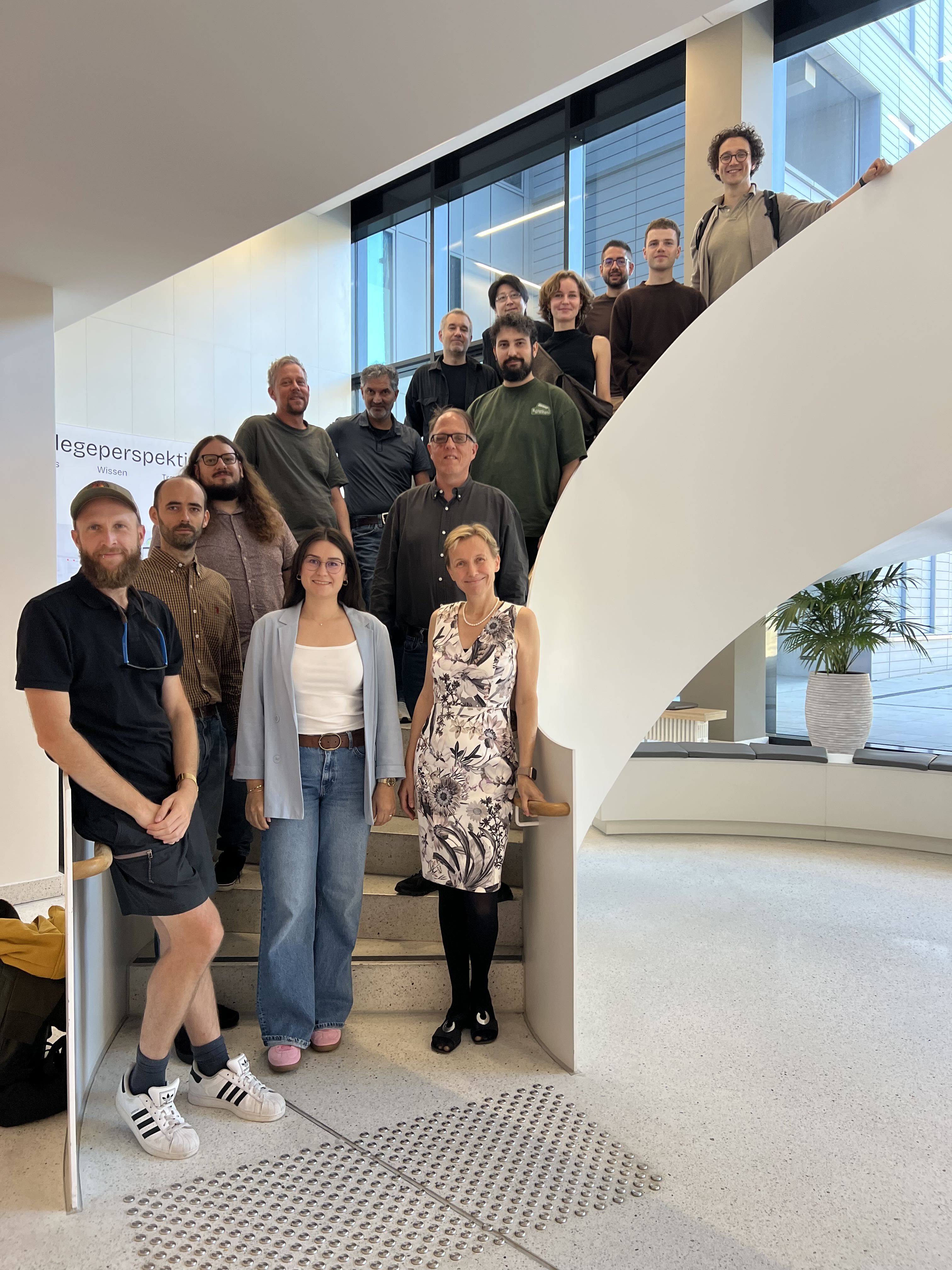
Attendees
  • Andreas (Andi) Bueckle, CNS Research Lead, Indiana University (website)
  • Aybuge Altay, Postdoctoral Fellow, BIH at Charité (website)
  • Aleix Arnau Soler, Scientist, Max-Delbrück-Center (website)
  • Jochen Buettner, Research Scholar (website)
  • Christian Conrad, BIH-Professor Intelligent Imaging (website)
  • Eisuke Dohi, National Center of Neurology and Psychiatry, National Institute of Neuroscience (Japan) (Google Scholar)
  • Dominik Seelow, Professor of Bioinformatics and Translational Genetics (website)
  • Ines Gerard-Ursin, PhD student, University of Vienna (website)
  • Michael Schoeber, PhD student, University of Vienna (website)
  • Michael Gargano, Senior Scientific Software Engineer, The Jackson Laboratory (website)
  • Luiza C. Campos, Professor, University College London (website)
  • Maria-Esther Vidal, Professor, Leibniz University Hannover, TIB & L3S Research Center, THIRDWAVE project (website)
  • Disha Purohit, TIB Scientific Data Management, THIRDWAVE project (website)
  • Enrique Iglesias, L3S Research Center, THIRDWAVE project (website)
  • Yashrajsinh Chudasama, TIB Scientific Data Management, THIRDWAVE project (website)
  • Bruce W. Herr II, CNS Technical Director, Indiana University (website)
  • Patrick Simon Nairne, PhD, Postdoctoral Fellow at BIH Charité (website)
  • Leonardo Chimirri, Postdoctoral Fellow at BIH Charité (website)
  • Alex Kadhim, Research Fellow at University of Southhampton (website)
  • Katy Börner, Professor & CNS Center Director, Indiana University (website)
  • Peter Robinson, Professor, BIH at Charité (website)
Support
  • Wiebke Hartung, Office Manager for Robinson Lab, BIH at Charité (website)
Goals
  • Explore connecting HRA with diseases in HPO to other data.
  • Share HRA and HPO data across atlas and other R&D efforts.
  • Use HRA lightweight components and other HRA code in other data and atlas portals.
  • Expand utility of existing HRA Jupyter notebooks.
  • Identify synergies across human atlas and biomedical research efforts.
References